D'Artagnan all natural meat, game, poultry, foie gras & pate
Log In
My Order
Quick Shop
Ariane's Value Club
Newsletter
Recipes
News
Home
Search
Everything
but the Quack
WHAT'S NEW
Value Club Specials
Foie Gras
Duck
Game Birds
Game Meats
Chicken & Capon
Turkey & Goose
Beef
Buffalo
Veal
Lamb
Pork
Rabbit
Pâtés, Mousse & Terrines
Cured & Smoked
Meat
Sausages
Breakfast Sausage & Bacon
Hot Dogs
Truffles, Mushrooms & Other Produce
Gifts &
Collections
Ariane's Freezer
Pantry Items &
Condiments
Entertaining
Ideas

Holidays &
Special Occasions
<
D’Artagnan Sustainable Farming

What is sustainable farming and
why does it matter?

We at D’Artagnan believe that sustainable farming is simply the responsible practice of meeting our common need for good, clean, delicious & nutritional food without endangering the future.

This means raising livestock humanely on natural foods, clean water, in environments that are open, but provide protection from the elements where necessary. It also means not using antibiotics, growth hormones, artificial preservatives, or animal byproducts.

Established on the principles of procuring the freshest, cleanest and most natural products, D’Artagnan has long been a supporter of small farms, usually run by a single family who believe and practice sustainable farming. They care for their animals using good moral judgment and don’t see them simply as a means of profit.

Our Small Farms

Pastured Beef Pork
Buffalo Poussin
Chicken Quail
Duck Rabbit
Foie Gras Estate Scottish Game
Goose Squab
Guinea Hen Turkey
Lamb Veal
Ostrich Venison
Pheasant Wagyu Beef
Wild Boar
   
Pastured Beef

In 1947, Eleanor and her husband, Lawrence Smith were living a rich, full life in Philadelphia. Both were deeply committed to sustainable agriculture, at least in theory, when they took the notion to buy a saltwater farm in Maine. It was the perfect place to begin their natural farming operations...proof of their strong belief in the useful preservation and protection of America’s open spaces.

The long-range planning of the farm began in 1949, when Eleanor became a member of the local Soil Conservation District. Eleanor likes to say she has been in the conservation world since ’conservation’ was a dirty word. In 1959 Eleanor and Lawrence formally launched their natural farm with 17 Black Angus cows.

The herd was then and is still raised naturally with no added growth hormones, without antibiotics, and is not fed animal by-products. It is pastured as long as weather allows and is finished on a diet of clover hay, corn, barley, and potatoes. In keeping with the environmental conservation that is their foundation, only their own nutrients are given to their animals and no chemicals are applied to the pastures.

To ensure consistent and high-quality texture, taste, and finish, animals spend a minimum of 120 days on select rations prior to slaughter. Third-party audits are used on a random basis to ensure that each animal is treated with the dignity and good care it deserves.

   
Buffalo

All of D’Artagnan’s natural, free-range buffalo (also called bison) comes from a small 16-employee, family-owned ranch that has been raising and selling Buffalo for over 10 years. The ranch raises Plains Buffalo Breed exclusively for D’Artagnan.

Located about 25 miles from Montreal, the ranch raises no more than 200 head at a time. Since buffalo is a semi-wild species, they require and are given plenty of "elbow room" to ensure that they thrive. To support growing demand, the ranch owners have also established a cooperative program with local small farmers to raise buffalo for them. These animals are typically delivered to the ranch relatively young (approximately 6 months) and then raised alongside the existing herd until they reach about 24 months of age.

The operation is a perfect blend of "Old World" hands-on experience with the latest in agricultural technology. The buffalo are raised in a clean and natural environment where they feed mainly on natural forage supplemented with grain and hay. They are raised without the use of chemicals, growth hormones or steroids.

Everyone involved in the buffalo ranch has a lot of respect for their animals and firmly believes that overall animal health and well-being is the key to success. This special attention in the raising of these animals has produced the finest and healthiest available buffalo meat in North America.

   
Chicken

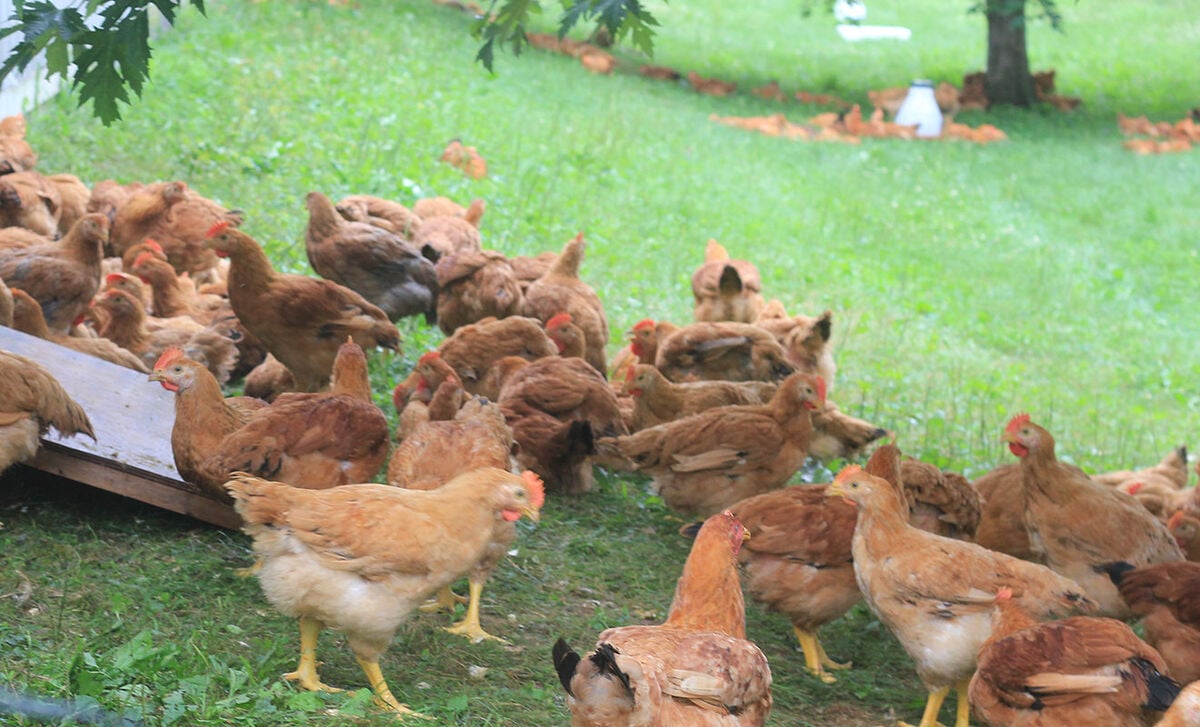
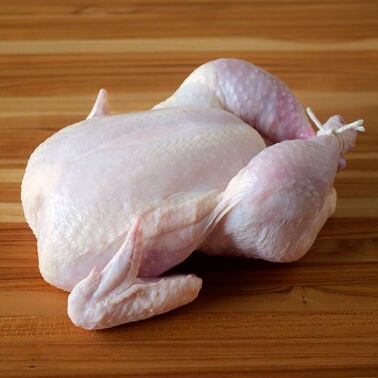
We sell both Certified Organic and Air-Chilled Chicken at D’Artagnan. All birds are raised to our own specifications.

Our Organic Chickens originate on small Amish and Mennonite family farms in the heart of Pennsylvania Dutch Country. The family tradition of raising poultry nature’s way makes a world of difference in the flavor of our chicken.

Birds are raised in a low volume environment that greatly enhances their quality and taste. In our world, raising poultry is a balanced blend of family farm tradition and advanced development of breeds and organically-grown grains. Each bird offered to you comes from a true free-range environment where they get plenty of sunshine, fresh air, and room to roam. They are fed only organically-grown grains. Their pure, mineral-rich water comes from the same well that the family uses for drinking. The chickens are never exposed to growth stimulants, antibiotics or animal by-products.

D’Artagnan Air-Chilled Chickens, like our Organic birds, are free-range and fed only the cleanest, best diet. This flock comes from a small farm in Canada.

What’s completely different is the way D’Artagnan Air-Chilled Birds are processed. To provide the greatest amount of freshness and shelf-life, each bird is 100% air-chilled instead of dipped in water to cool more rapidly. This minimizes the aging effect on the meat, preserves intense moisture, and results in the wonderful smooth texture and taste of this true, authentic poultry.

   
Duck

Ariane Daguin started D’Artagnan by selling duck and, despite our wide variety of product offerings, it remains a cornerstone of the company. We sell many different kinds, but Moulard, Pekin, and Muscovy account for most of the duck sold to home gourmets.

Moulard Duck:
In Gascony (as with D’Artagnan), Moulard ducks are the backbone of gastronomic traditions. There is almost a religious reverence about the birds. Ariane sometimes jokes that one day it will be found that Gascons have a region in their brains that preserves all known duck lore and recipes.

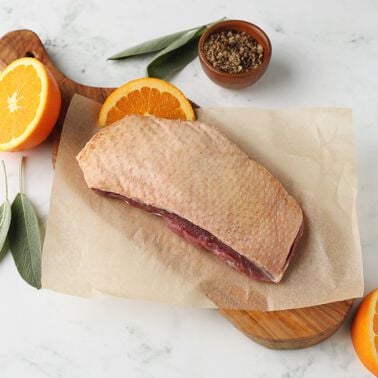
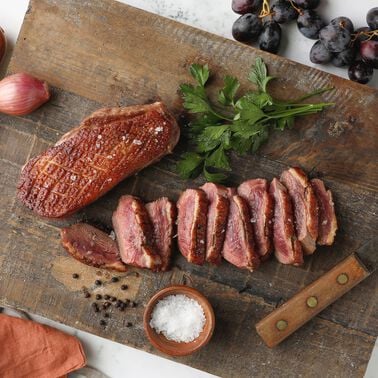
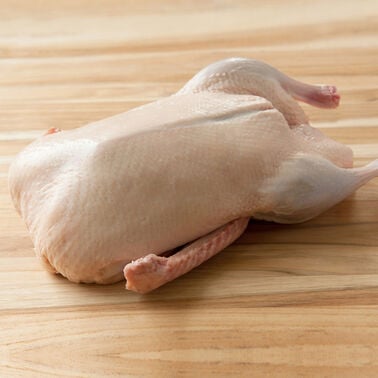
The Moulard breed actually results from a cross between female Pekin and male Muscovy ducks. This is the breed of duck used for rich, delicious foie gras, no part of the duck, however, goes to waste. Legs are used to create confit. Breasts are aged or marinated for magrets. Whole ducks are sold for stuffing and roasting. Gizzards enrich lovely cassoulets.

D’Artagnan Moulards are raised on small privately-owned farms where they are raised in well-aired barns on whole grain diets and fresh, clean water.

In New York, Izzy Yanay and Michael Ginor focus on raising delicious foie gras and duck on their 200-acred farm. Izzy has long been involved with the raising of ducks and geese. He headed up one of the largest duck farms in Israel prior to coming to American. Michael, a native of Seattle, also spent time in Israel learning about duck farming.

Another farm providing D’Artagnan Moulards is located in Northern California. In 1985, Guillermo and Junny left El Salvador to start a duck farm in America. They are committed to the highest standards of animal welfare, using the most humane, modern techniques available in raising and feeding their flock. Ducks are never individually caged and are allowed free-range for most of their lives. They have built up a unique following among restaurant and home chefs.

Pekin Duck:
All of the Pekin ducks in the U.S. are said to descend from nine Mallard ducks imported to Long Island, New York in 1873 from China. It is believed that they originally arrived in San Francisco in the 1870’s and made their way (with the help of wagons and trains) to the East coast. In any case, from those small beginnings, Pekin has become the best selling type of duck in the U.S. Pekin ducklings are generally raised to 6 to 8 weeks for optimal tenderness.

D’Artagnan Duck, like all of our meat, comes from a farm committed to the belief that using responsible animal husbandry is not only an obligation, but good business because it in the highest quality products.

Our duck farm cooperative began as a small operation in Indiana, in the mid-1950’s. Today it’s led by the second generation of duck enthusiasts.

Our ducks are raised on a cooperative of family farms, many of them Amish or Mennonite, by growers who have been trained and certified concerning duck care and behavior. In addition to equipping them with comprehensive training, we also provide our growers with specific duck care guidelines and personal assistance from our animal husbandry staff and veterinarians so that they ensure the well-being of our ducks.

The farms go to great lengths to maintain a healthy environment for the ducks. They are raised in spacious barns that protect them from extreme weather conditions, predators and disease. The ducks have room to roam about and access to fresh water and feed.

Our ducks are not fed antibiotics, steroids, hormones or other growth stimulants. In fact, a poultry nutritionist that formulates a natural, grain-based diet for our ducks and oversees the production of that feed at our company feed mills to ensure consistent quality.

Each farm takes great care with the ducks, not just because they’re a livelihood, but because it’s the right thing to do.

Muscovy:
Originating in the warm climates of South America, Muscovy duck is the leanest domesticated duck breed and is known for is rich, full flavor. In fact, Muscovy ducks have less fat and less calories per pound than turkey.

D’Artagnan Muscovy originate from a single farm in California. The birds are barn-raised without the use of steroids, antibiotics or growth hormones. They are grown for 70-85 days (versus the more typical 42-45 days) to allow the birds to fully mature. Feed is carefully selected for a balanced diet and for the best possible yield and flavor.

   
Foie Gras

D’Artagnan offers foie gras from several small farms.

New York:
Hudson Valley Foie Gras, located in New York State, was founded by two dedicated farmers -- Izzy Yanay and Michael Ginor. Izzy has long been involved with the raising of foie gras ducks and geese. He headed up one of the largest foie gras farms in Israel prior to coming to American. Michael, a native of Seattle, also spent time in Israel learning about foie gras raising and production. Hudson Valley Foie Gras handles every portion of the production of foie gras -- from breeding and raising the birds, to packaging the final products.

Sonoma:
The third farm providing D’Artagnan foie gras is located in Northern California. In 1985, Guillermo and Junny left El Salvador to start a foie gras farm in America. They are committed to the highest standards of animal welfare, using the most humane, modern techniques available in raising and feeding their flock. Ducks are never individually caged and are allowed free-range for most of their lives. They have built up a unique following among restaurant and home chefs.

Quebec:

In the Canadian provence of Quebec one often gets the sense of France. Vineyards dot the countryside. Produce served in the cafes is locally grown and the family that’s raised it may be seated two tables away. Artisan cheeses abound. And then there’s foie gras. Started in 1993, our Canadian foie gras farm balances modern production techniques with the artisanal roots of its founders. Here you’ll find ducks roaming in the fields and handlers who attend to their needs. When the time comes for gavage, it is done humanely and with the recognition that great foie gras requires the highest quality diet (in this case, 100% corn) and, most importantly, the lowest stress environment possible.

   
Goose Work in progress
   
Guinea Hen

Related to pheasants, turkeys, and other game birds found in the wild, Guinea Hens originate in Africa. They are a insect- and seed-eating bird resembling partridges with featherless heads and lovely spangled-grey plumage. They nest on the ground in their native habitat.

Raised for D’Artagnan in California, these birds are grain fed without hormones, antibiotics, or steroids in a free-flight environment. Guinea Hen meat has 50% less fat than chicken and a hefty 50-50 ratio between meat and bone.

They are relatively large birds measuing 40 - 71 centimeters in length. An average breast weighs seven ounces when french cut with the drum on. The breast is wonderful when braised. The legs are perfect when braised or confited. The whole birds may also be barded and slowly roasted for an impressive (and tasty) display.

   
Lamb Work in progress
   
Ostrich Work in progress
   
Pheasant

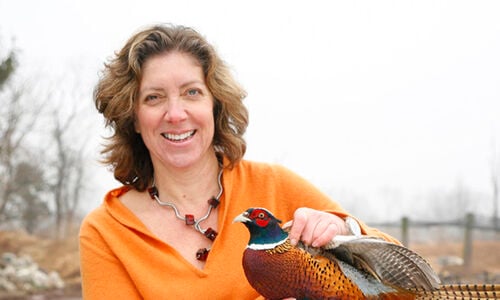
D’Artagnan offers domestic and Scottish Ring-Necked Pheasant. These birds, originally imported to America from Asia, the Ring-Necked Pheasant is one of a handful of game species to florish on this continent. One of 40 pheasant species introduced, the Ring-Necked Pheasant is the most popular and best known, especially the male because of its highly ornate and brightly colored plumage.

D’Artagnan Pheasant have a very distinctive taste and texture, unlike the more commercial Milan White. They are naturally fed and raised in free-flight outdoor conditions on a whole grain diet.

Each bird is a perfect 2-person portion. Females are sold with feet on. Males have feet removed. The males are great as Frenched-cut breasts with the darker, faster cooking thighs reserved for confits and braising. Please note that the legs (not thighs) can be tough because of the tendons. For this reason, we advise barding to stem fat loss during cooking.

Roast pheasant slowly to avoid a dry, tough texture. Breasts can be sauted quickly over high heat.

   
Pork

300 years ago, legend has it, the Berkshire hog was discovered (gratefully, we’re sure) by Oliver Cromwell’s army as they entered their Winter quarters in the shire of Berks, England. Surprisingly, this breed has remained pure (making it a real Heritage breed) and is renowned for delivering such exceptional taste and tenderness that it’s been the preferred pork for British royalty, Asian emperors, and four-star chefs around the world.

Known as the "black pig," the superior taste of Berkshire pork makes it an ideal choice for tasty chops, racks, and moist delicious hams.

D’Artagnan Berkshire Pork is 100% Berkshire and Certified Humane by the Human Farm Animal Care Association. This certification requires that each animal have at least 15 square feet of living space, access to the out-of-doors, and is not exposed to multi-animal gestation crates. Animals are never administered antibiotics or hormones and are fed a strictly vegetarian diet of corn, soybeans, and rolled oats.

In addition, D’Artagnan’s Pork comes from family farms where individual family members supply at least 50% of the labor involved in raising and caring for these special animals.

   
Poussin Work in progress
   
Quail

Not too far from New York City mileage-wise, but a world away in mind set, lies the family farm that raises D’Artagnan Quail. There, in Southern New Jersey, are raised the Corturnix (sometimes referred to as Pharaoh) breed of quail. We’ve found this breed delivers a moister mix of light and dark meat than the more common, higher-yielding Bobwhite that is raised by most farms.

In 10,000 square feet of clean, open, well-lit barn space, D’Artagnan Quail roam (and fly) freely and are fed the best grains available on the market, a diet specifically selected to deliver plumb, delicious birds perfect for intimate dinners or grand occasions or a simple grilled feast.

Quail are wonderful roasted, stuffed, or marinated and grilled. There are few cooks on earth that can, according to Ariane Daguin (D’Artagnan’s founder and owner), get it wrong with quail. Their size makes them versatile enough to act as a meal (usually in pairs) or as appetizer.

   
Rabbit Work in progress
   
Estate Scottish Game

Fall in Scotland brings not only cool nights and golden leaves, but delicious culinary gifts. It’s game hunting season and the gates of countless private estates, otherwise closed to most, are opened for hundreds of lucky hunters who book special vacations and tours for the right of access.

Scotland has long been famous for having some of the finest shooting estates in the world, frequented by royalty and the rich from around the world.

Fortunately for us, they don’t take all of their catch home and a portion is made available to us. Included in the D’Artagnan "take" each year is grouse, Red Legged partridge, brown hare, pheasant, and wood pigeon. D’Artagnan Scottish Game originates on a single estate located just outside of Chelmsford. Once shot, it take less than two days for this game to arrive at the D’Artagnan stateside warehouse.

All D’Artagnan Scottish Game is processed at facilities supervised by European Economic Community Inspectors (an organization similar to our USDA).

Because D’Artagnan Wild Scottish Game is shot in the wild, D’Artagnan customer sometimes find actual shot in the meat, so care in preparation and eating is recommended.

   
Squab

Squab -- or baby pigeon -- is a wonderful, tender alternative to more traditional poultry. For this reason it is often referred to as the "King of Birds." Its rich red meat is perfect for classic French recipes. It was much used to prepare special occasion dishes in Victorian England.

Raised by a cooperative of small farms in California’s beautiful Central Valley, D’Artagnan Squab is certified all-natural and residue-free by the California Department of Agriculture. D’Artagnan only offers squab that have never flown. For this reason, as well as because of their whole-grain diet, each bird provides a plump, rich breast that delivers dark, rich, and moistly flavorful meat.

In fact, squab is known for its singular ability to retain moisture during cooking, making it a very versatile, easy bird to prepare. (Try our easy recipe for <a href="https://www.dartagnan.com/recipe.asp?id=35&category=8">Pan-Roasted Squab with Cabbage and Bacon </a> to see what we mean.)

   
Turkey

Deep in the heart of Pennsylvania is found Berlin County, a land of rolling green hills and deep red, nutrient-rich soil where farming is the predominant occupation. That’s where you’ll find the farms that raise our organic turkeys. D’Artagnan offers several kind of turkey -- Heritage (from original American stock), Wild, and Organic -- all of which are hatched and raised on small Amish and Mennonite family farms. The family tradition of raising poultry nature’s way makes a world of difference in the flavor.

Birds are raised in a low volume environment that enhances the quality and taste. In our world, raising poultry is a balanced blend of family farm tradition and advanced development of breeds and organically-grown grains. Each bird offered to you comes from a true free-range environment where they get plenty of sunshine, fresh air, and room to roam. They are fed only organically-grown grains that are naturally high in protein and nutrients. The water fed to the turkeys is the same pure, mineral-rich water that the farm family drinks themselves. They are never exposed to growth stimulants, antibiotics or animal by-products.

   
Veal Work in progress
   
Venison Work in progress
   
Wagyu Beef

Our Wagyu Beef ranch is nestled deep in the heart of East Texas cattle country. It is owned and managed by a family with over 75 years of experience. Three generations of cattlemen (and women) have produced quality beef with the future in mind.

Larry, the current head honcho, had a vision and felt strongly about producing the finest quality, healthiest beef possible that would be offered direct from the ranch to the consumer.

Larry, his family, and their associates went in search of breed stock to make his vision a reality. After much research and travel, the Japanese Wagyu was selected.

Wagyu Beef is the breed used for the famous Kobe Beef. They are genetically predisposed to produce the most succulent, well-marbled, and flavorful beef in the world.

After several more years of selection and a few dozen trips direct to Japanese farms , the specific cattle were identified and finally travel arrangements were made.

Now several thousand head of these fine cattle graze free on lush green pastures and raise their beautiful (and tasty) offspring each year.

   
Wild Boar

Originally brought to North America from Europe for food by the Spanish in the 1500’s (and then later in the early 1900’s by those looking to duplicate the excitement of the hunt), D’Artagnan Wild Boar are raised in a vast ranch located northeast of Saskatchewan.

The boar run wild on 25-30 acres of the 1,100 acre ranch, providing them with access to all that’s needed for good health and great taste. Individual animals remain with their mothers until three months and are then weaned. With their excellent sense of small, they’re adept at finding a varied diet of grass, roots, nuts, fruits, acorns, and heather. This is supplemented with a high protein feed of barley, peas, and wheat to deliver superior muscle tone and texture.

All D’Artagnan Wild Boar comes from the European SuScrofa breed and is USDA inspected. Wild Boar racks, loins, and tenders are best with quicly sauteed or grilled over high heat. The leg and shoulder cuts are perfect when braised or slow-roasted.

 
Contact Us
Store Locator
Customer Service
Your Privacy

(800) 327-8246 ext. 0