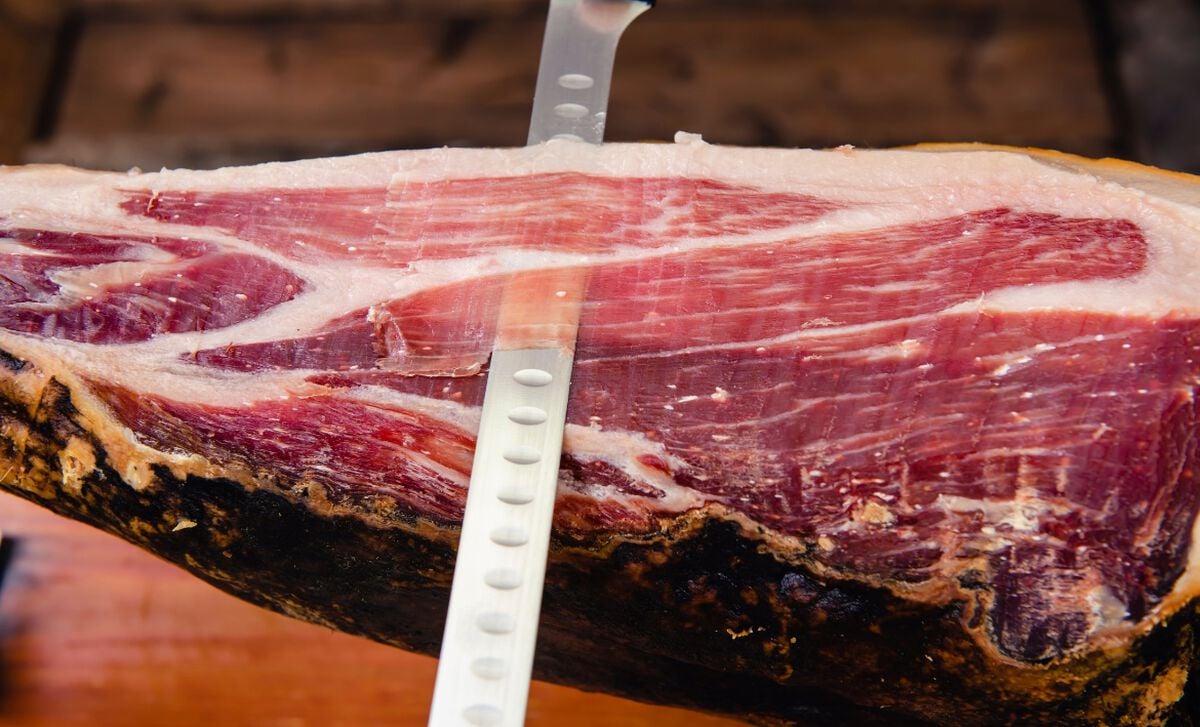
From the country hams of Virginia to the legendary hams of Spain, the preserved hind leg of a pig is one of the foods that inspire cookbook authors and diner cooks alike. Originally a way to cure and store the hindquarters of a slaughtered pig to last the winter, the process of curing ham has evolved into something akin to art. Much like bacon, ham can be cured in a variety of ways.
- Fresh hams are cut from the pig, cleaned and hair removed. They can be cooked just like any fresh cut of pork.
- Wet-cured hams are injected with a curing solution (usually with water, sugar, honey, and preservatives), or are rubbed or tumbled in the curing solution. Wet-cured hams are often uncooked, partially cooked and smoked, or fully cooked and ready to eat. The wet-cured ham is the classic American ham, glazed and roasted for a holiday meal.
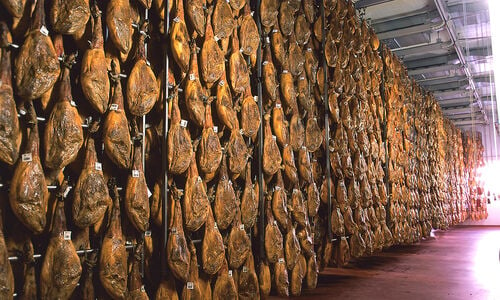
- Dry-cured or country hams are like Italian prosciutto, salted and air-dried for long periods of time, often over a year. Spain is famous for its dry-cured ham, called jamón, which can age for up to 3 years, intensifying in flavor the entire time.
Jamón Serrano
Jamón Serrano, or Serrano ham, meaning “mountain ham,” is aged in the fresh mountain air of Spain for a minimum of 18 months with only natural Mediterranean sea salt acting as a preservative. Most Serrano ham is made from Landrace breed pigs, or a mix of Duroc breed, Large White, and Landrace. In Spain, Serrano ham is a part of life, served in bars, and restaurants, and found in virtually every home, where jamon often rests in a carving stand on a sideboard.
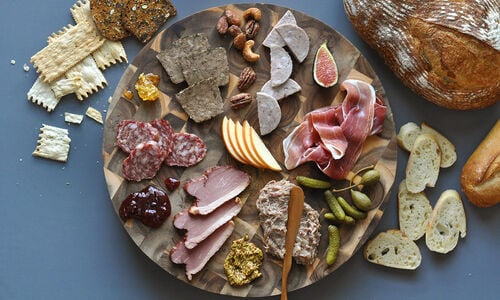
Air-cured jamón is a Spanish culinary icon and a true pleasure for the taste buds. With its deep-pink color, firm texture, and savory flavor, our Serrano ham is an approachable, everyday pleasure. Enjoy the famous dry-cured Serrano ham with our convenient pre-sliced option. You’ll find endless ways to use this generous family pack, from charcuterie and cheese plates to wrapped meats, fish, fruits, and vegetables.
Ibérico Ham
Serrano should not be confused with Ibérico ham, which is made from the Black Iberian breed, related to ancient wild boar. Within the famous Jamón Ibérico category, there is a strict grading system, indicating everything from breed and diet. The Black Label Ibérico de Bellota is made from the red pork of purebred Iberian hogs raised in pasture and oak groves in the southern regions of Spain, eating grass, herbs, roots, and acorns. The oaks of the Dehesa, an ecologically unique region, are a vital part of this ecosystem. This diet lends to the development of the trademark fat, a monounsaturated fatty acid, associated with balancing cholesterol.
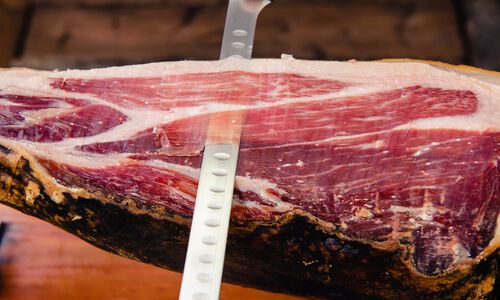
Ibérico jamón has red meat, a highly aromatic marbling, a nuanced flavor, and is so silky and tender that the fat liquefies at room temperature. The intensity of the color, and the fat content will vary across the labels, as the red, green, and white indicate the percentage of Iberian heritage mixed with other pig breeds.
Ibérico hams were known as a delicacy even in the days of the Roman Empire, and they are still handcrafted using time-honored traditional methods. Master ham artisans let salt, time, and clean mountain air do the work, as they monitor and turn the hanging jamóns for 18 months, or two to three years. Whatever grade they carry, every Ibérico jamón will be a delight on the palate and a welcome addition to any plate.
Jambon de Bayonne
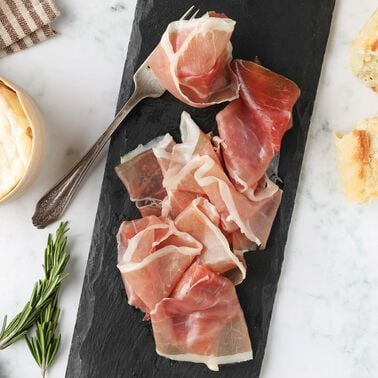
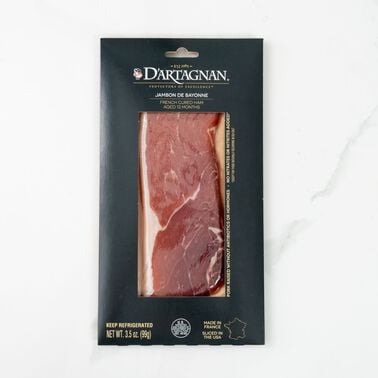
Jambon de Bayonne is an air-cured, salted ham and a gastronomic jewel that takes its name from the ancient port city of Bayonne in the far southwest of France, in the cultural region of Gascony and the Basque country. Jambon de Bayonne enjoys protected status (PGI), which means there are regulations that control every aspect of production to guarantee quality. The pork must come from one of eight defined PGI-certified breeds of pigs raised in a specific area, and be fed a strictly controlled diet. Even transport, slaughter, size and weight, minimum fat content, and post-slaughter storage temperature are all regulated.
The hams are naturally cured for a minimum of 12 months, where the warm wind of the Pyrenees Mountains meets the humid air from the ocean, and only the mineral-rich salt of Salies-de-Bearn may be used. All of this must be done to develop the unique flavor and earn the coveted label “Jambon de Bayonne."
Related Products
Starting at
$12.99
- Hand-crafted ham with Protected Geographical Indication (PGI)
- Hind leg from PGI-certified pigs
- Naturally cured with only Salies-de-Bearn salt
- Regulations enforced by the Consortium du Jambon de France
- No nitrates or nitrites
- Dry-aged for a minimum of 12 months
- Unique climate contributes to extraordinary ham
- Sold sliced and ready to eat; no additional preparation required
- Product of France
- For best taste, use within 3-5 days from opening
- Subscription Eligible
Starting at
$549.99
-
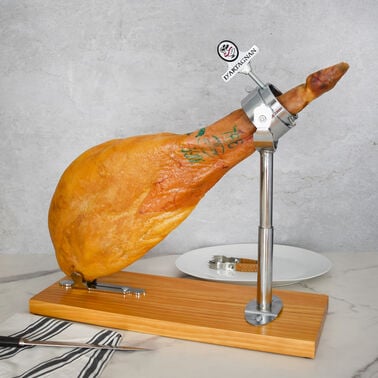
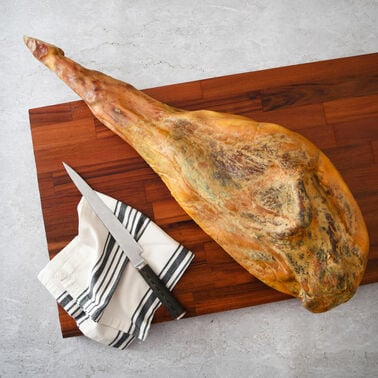
Ibérico de cebo, from pigs at least 50% indigenous Black Iberian breed
-
Pigs eat a vegetarian diet
-
Naturally air-cured in Spain for an average of 32 months
-
No nitrates or nitrites added
-
Naturally cured with only sea salt
-
Bone-in, ships ready to carve and serve
-
Shelf life of six months if kept refrigerated
-
Product of Spain
Starting at
$19.99
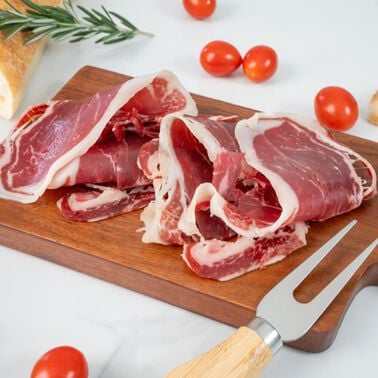
- 100% Ibérico de Bellota
- Made of pork shoulder from the indigenous Black Iberian pig
- Raised on pastures and oak groves with an acorn diet
- Prestigious Black Label known as pata negra
- Fully air-cured for 32 months in Spain
- The purest expression of jamón
- No nitrates or nitrites added
- Naturally cured with only sea salt
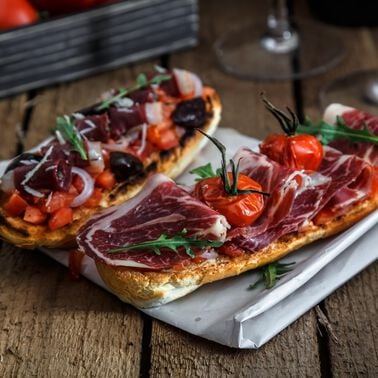
- Thinly sliced and ready-to-serve
- Product of Spain
- Subscription Eligible